

What Does Trauma Bonding Look Like? How to Start Healing
October 14, 2025
If you’ve ever known someone who was in an abusive relationship, you’ve probably found yourself wondering, Why doesn’t she just leave? Clearly, the relationship is unhealthy — possibly even dangerous — so the obvious solution would be to get out, right?
Those who have been in an abusive relationship know that departing is a lot easier said than done. In fact, you may have asked yourself the exact same question: Why don’t I just leave?
The answer to that question is a complicated one, but the reality is that most people in abusive relationships find it hard to leave. And one of the main reasons is a process called trauma bonding.
In this blog post, you’ll learn how trauma bonds form, what they look like, and why they can be difficult to break. We’ll also discuss the importance of doing so and map out what the steps to healing look like. With the right support, you can break free from the cycle of fear and rediscover the stability, peace, and self-worth you deserve.
What is a Trauma Bond?
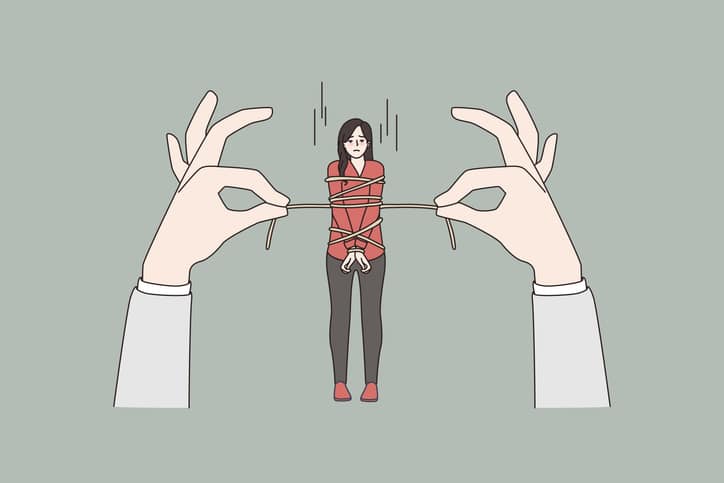
Trauma bonding is an emotional attachment that forms between a person and someone who abuses, manipulates, or mistreats them. When someone experiences both fear and comfort from the same person, their brain starts to associate safety with the abuser. Over time, this creates a powerful psychological connection that’s difficult to break, even when the person recognizes the relationship is harmful.
Why Does Trauma Bonding Happen?
Our body’s natural stress response plays a key role in trauma bonding. While you’ve probably heard of the fight-or-flight response, there’s also a “freeze” response to stress. When you’re in an abusive relationship, your stress response can be triggered by the abuse or the possibility of abuse.
As a result of both the connection between you and your partner and the power imbalance created by the abuser, staying in the relationship (“freezing”) is often the response that is triggered to protect yourself.
Another tricky aspect of an abusive relationship is that the person who is often consoling you after the mistreatment is the abuser. Apologies, gifts, and affection are typical gestures after incidents of abuse. While these may help to ease your fear and anxiety, they also connect you further to your partner as they cue the release of dopamine and oxytocin within your brain.
How Trauma Bonds Form
Trauma bonding often develops in relationships that follow a repeating pattern:
- Abuse or control: The abuser causes emotional, physical, or psychological harm.
- Reconciliation: They apologize, show affection, or make promises, offering temporary relief and hope.
- Calm phase: Things seem better for a while, which strengthens the belief that change is possible.
- Tension builds again: The cycle restarts, deepening dependency and confusion.
Why They’re So Hard to Break
Trauma bonds are reinforced by intermittent reinforcement — the unpredictable mix of abuse and affection. This creates the same kind of powerful conditioning seen in addiction. Emotional dependence, shame, isolation, and fear of starting over also make it difficult to leave.
Common Trauma Bond Symptoms
Recognizing a trauma bond can be confusing, especially when emotions are deeply entangled with fear, guilt, or attachment. Below are some common signs that may help you identify whether your relationship is shaped by a trauma bond.
Intense Connection Early in the Relationship
Many trauma bonds begin with a whirlwind of affection and attention. The relationship may have moved quickly — perhaps there were declarations of love early on or future faking that manufactured a strong sense of destiny that felt impossible to question. This kind of intensity can feel exciting at first, but it often lays the groundwork for dependency. The emotional highs and lows that follow can make you crave the intense connection again, even after hurtful experiences.
Gradual Isolation from Friends and Family
Over time, you might find yourself seeing loved ones less often or feeling reluctant to share details about your relationship. This distance often happens slowly, making it hard to notice at first. Your partner might discourage contact with others, or you might withdraw on your own to avoid conflict. The result is a growing sense of isolation that makes it harder to get outside perspective or emotional support.
Feeling Trapped Despite Unhappiness

One of the strongest indicators of a trauma bond is staying in a relationship that feels painful or unfulfilling. You may be fully aware that the relationship is unhealthy but still feel powerless to leave. This happens because the cycle of affection and abuse can create a deep emotional dependency — one that convinces you things will get better or that you can’t survive without the other person.
Excusing or Minimizing Harmful Behavior
People in trauma-bonded relationships often defend their partner’s behavior or focus on the few good moments as proof that things are improving. You might say things like, “They didn’t mean it,” or “They’ve been under a lot of stress.” These justifications help you cope in the short term but also reinforce the cycle, keeping you tied to the hope that the person you love will change.
Protecting Your Partner’s Reputation
Keeping the abuse a secret is another common sign. You might avoid telling others what’s really happening to protect your partner or prevent judgment. This secrecy can deepen the shame and make it harder to reach out for help. It’s also a way the trauma bond strengthens, as the relationship becomes a closed system where your partner’s version of reality dominates.
Fear of Leaving or Being Alone
Fear often plays a major role in maintaining a trauma bond. You may worry about your partner’s reaction if you try to leave, or you might fear what life will look like without them. Even if the relationship is painful, the idea of change can feel more frightening than staying where you are. This fear keeps the cycle going, feeding the belief that you have no real options.
Believing Your Partner Is the Only One Who Understands You
A trauma bond can make it feel like no one else could ever love or understand you the same way. This belief forms because of the emotional highs; moments when your partner seems to know exactly what you need or makes you feel seen in ways no one else has. Those moments can be powerful, but they also create a false sense of connection that keeps you emotionally dependent, even when the relationship causes harm.
What Happens If a Trauma Bond Is Left Unchecked?
When a trauma bond isn’t addressed, the cycle of emotional dependence and abuse tends to deepen over time. The longer it continues, the harder it becomes to separate love from control, leaving the person feeling trapped, isolated, and unsure of their own reality.
Unchecked trauma bonds can lead to long-term emotional distress, such as chronic anxiety, depression, low self-worth, and difficulty trusting others. You may even mistake chaos or intensity for love, repeating the same painful dynamics in future relationships.
Over time, these patterns can also affect a person’s ability to form or maintain healthy intimacy. Relationships may become emotionally distant or overly dependent, and closeness can start to feel unsafe or tied to conflict.
What Does Trauma Bonding Recovery Look Like?
Healing from a trauma bond takes time and support, but each step helps you rebuild your sense of safety, identity, and control.
- Recognize the bond for what it is: Acknowledge that the relationship was built on control and emotional dependence, not healthy love.
- Make a plan: Prepare a clear, realistic plan for leaving; plan your timeline, where you’ll go and, if concerned for your safety, take measures to ensure your partner won’t be able to easily find you once you leave.
- Make sure you have a support system: Surround yourself with people who understand your situation. If you don’t have friends or family who can assist you, consider enlisting the help of a local domestic abuse agency or church.
- Leave when it’s safe: When you’re ready, end contact in a way that prioritizes your physical and emotional safety, even if that means seeking professional or legal help.
- Reconnect with yourself: Rebuild your confidence and identity by rediscovering your interests, values, and independence.
- Allow space to grieve: Accept that it’s normal to mourn the loss of the relationship, even if it was harmful.
- Set firm boundaries: Limit or cut off contact to stop the cycle of emotional manipulation and regain stability.
- Seek professional and community support: Work with a therapist or support group to process trauma and learn healthier relationship patterns.
- Rebuild trust: Strengthen trust in yourself first, then gradually open up to safe, respectful connections with others.
Start Building a Life That Feels Safe Again
Healing from a trauma bond takes courage, but you don’t have to do it on your own. If you’re thinking of leaving an abusive relationship or have left one and are in need of support, seeking help from a professional counselor is a great way to aid your recovery.
At Willow Healing Center, we offer counseling for emotional trauma of all kinds and can give you the tools you need to fully recover from a trauma bond and more. You don’t have to continue your journey toward healing and wellness alone. Allow us to come alongside you by reaching out today.